The primary concern with for a management plan going forward is the lack of data available to create a baseline, and continued monitoring of key indicators of water quality.
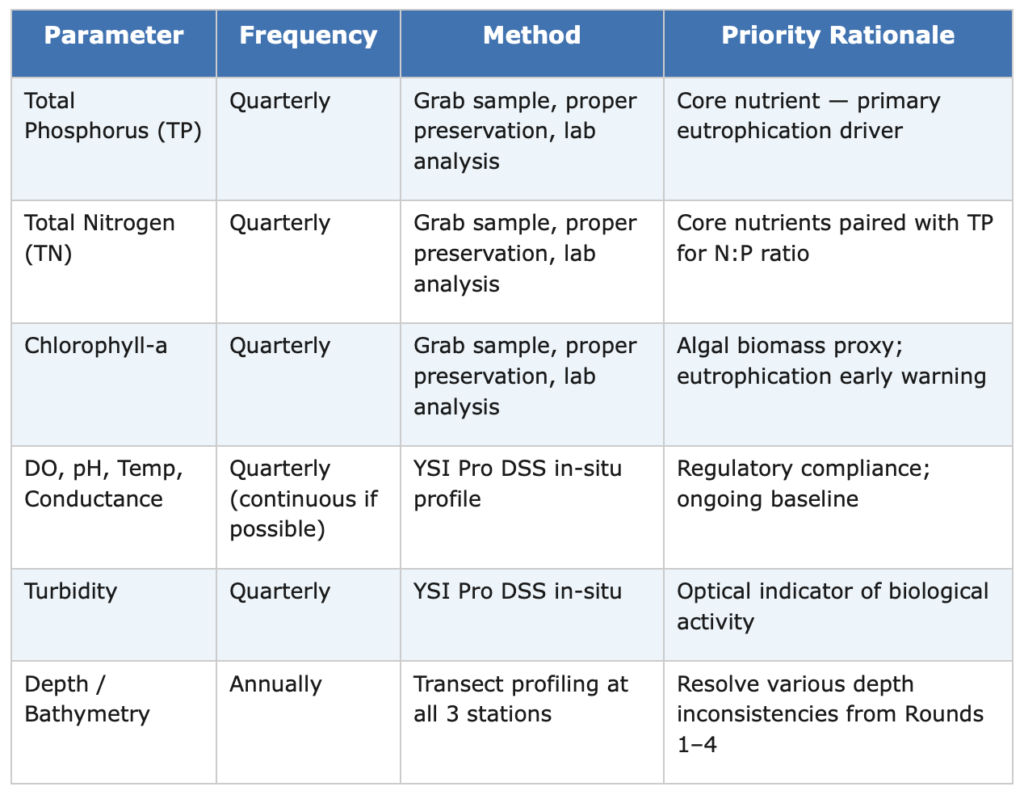
Emphasis on monitoring nutrient levels in the water is key for detecting the conditions for algal blooms before they occur. They are the most immediate threat to the health of the lake’s ecosystem.
All stakeholders in the community should be included in the management of Lake Fred. It is the Stockton Community’s responsibility to properly manage and protect the ecosystem that the campus relies on for its beauty, scientific value, and health. Stockton University needs to take an active role protecting the environment for the health, safety, and prosperity of the students and the community.
Management Goals
- Establish a validated TN and TP baseline for Lake Fred using high quality, NJDEP-compliant sampling procedures, beginning no later than the next scheduled sampling round.
- Integrate chlorophyll-A as a routine monitoring parameter across all three stations in all future sampling cycles.
- Resolve outstanding data quality issues from the March 2026 assessment, including the LFS2 depth inconsistency and the LFS3 Round 4 outlier, through targeted re-sampling and equipment checks.
- Maintain or improve compliance with all applicable NJDEP surface water quality standards under N.J.A.C. 7:9B throughout the planned period.
- Develop internal data quality objectives for all parameters. Establish acceptable precision and accuracy thresholds for the laboratory and field programs and activities.
- Produce an annual data summary report for distribution to stakeholders, including Stockton University environmental clubs, Pinelands Preservation Alliance group, and, where appropriate, the NJDEP.
The chart below shows the parameters that should be monitored and how often.